

Safety
As with any city, staying safe in London means being aware, street smart and taking simple precautions so you can enjoy your time with confidence.
Crime rates
Recent data from the Metropolitan Police and the Mayor’s Office shows that overall crime continues to fall across London, with reductions across a number of key crime types, including violence, burglary and robbery.
London is home to almost nine million residents and millions of visitors each year. While, as with any major global city, crime does occur, most Londoners say they feel safe in their local area.
By following simple safety advice and making use of university and local support services, students can feel confident exploring and enjoying everything London has to offer.
Reporting a crime or safety concern
If you ever feel unsafe or experience a safety concern, you should contact the police or relevant authorities straight away (dial 999 in an emergency or 101 for non-emergencies). Reporting a crime or concern will not affect your visa or immigration status, and you will not get into trouble for seeking help. It is always better to speak up.
You should also inform your university, as they can offer support, guidance, and help ensure your safety. Universities take student wellbeing seriously and are there to assist you.
Behaviours
There are simple steps you can take to reduce your exposure to crime and stay confident while exploring London.
Be Street-Smart
- Stay aware of your surroundings, especially in busy areas and tourist hotspots.
- Keep valuables such as phones and wallets secure and out of sight when not in use.
- Avoid distractions, including using your phone while walking in crowded areas or near roads.
- Consider using a phone case with a strap for extra security.
- Stick to well-lit and busy routes when travelling at night.
Use university support
Most universities offer a range of safety support, including campus security teams and safe walking services, 24/7 emergency contact numbers and safety and wellbeing briefings for new students. Make sure to save important numbers such as campus security and emergency contacts in your phone.
Know what to do in an emergency
- Call 999 if there is an emergency. You can choose to speak to the police, fire brigade or ambulance.
- Call 101 for non-emergency police enquiries.
- In public places, approach police officers, transport staff or security teams if you need help.
On public transport
You will often hear the phrase ‘See It, Say It, Sorted’ across London’s transport network. It means:
- See it → notice something unusual or suspicious, such as unattended items or behaviour that does not feel right.
- Say it → report it to a member of staff or the British Transport Police, or text 61016.
- Sorted → the situation will be handled quickly and appropriately.
Drink spiking
Drink spiking is when someone puts alcohol or drugs into your drink without your knowledge or consent. It can happen in bars, clubs, house parties, or even cafés.
Spiking someone’s drink is a serious crime in the UK and can result in up to 10 years’ imprisonment. It is never your fault. Symptoms can appear within 15–30 minutes and may be stronger than expected.
Signs of drink spiking
- Feeling much more drunk than expected.
- Confusion, disorientation, memory loss.
- Dizziness, nausea, vomiting.
- Difficulty speaking or walking.
- Sudden drowsiness or unconsciousness.
Prevention
- Don’t leave drinks unattended.
- Watch your drink being made.
- Don’t accept drinks from strangers.
- Stay with trusted friends.
- If it looks or tastes strange, stop drinking.
Anti-spiking scrunchies
Anti-spiking scrunchies are a simple tool designed to help protect your drink. They typically contain a hidden, stretchable cover that can be placed over a cup or glass to create a barrier, helping to prevent any substance being added. The most popular brand for these scrunchies is Nightcap.
Key benefits
- Easy to carry and discreet.
- Can act as a physical barrier for your drink.
- Promote awareness and confidence when socialising.
- However, they are not a guarantee of safety – they should be used alongside general safety practices.
What to do if you think you’ve been spiked
Get to safety immediately:
- Tell a friend.
- Alert staff/security.
- Don’t leave alone, stay with friends and get home safely.
Get medical help and report it quickly:
- Call 999 (urgent) and ask for police and ambulance.
- Report the incident to the police.
“Ask for Angela”
Ask for Angela is a UK public safety scheme in bars, clubs and pubs where you can discreetly ask staff for “Angela” if you feel unsafe. Staff are trained to help you leave safely, call a taxi, or contact security or the police without drawing attention.
Community safety
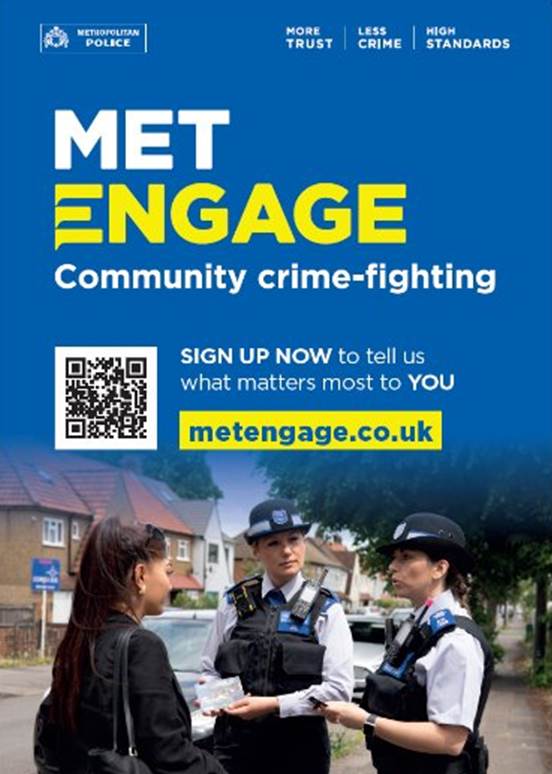
Met Engage is a free online platform by the Metropolitan Police that helps you stay informed, feel safe, and stay connected with police in your local area. If you’re new to London, Met Engage helps you:
- Understand what’s happening in your neighbourhood
- Get trusted safety advice
- Know who your local police officers are
- Message your local police team
- Feel more confident and secure living in a new city
When you sign up, you receive:
1. Local safety updates
- Alerts about crime in your area (e.g. theft, scams)
- Warnings about fraud or common tricks targeting students
2. Practical safety advice
- Tips on protecting your phone, bike, and belongings
- Advice on staying safe at night or using public transport
3. Connection to your local police
- Find and contact your Safer Neighbourhood Team
- Learn what they’re doing to keep your area safe
4. A voice in your community
- Share concerns (e.g. unsafe areas, harassment, theft)
- Complete surveys about local safety priorities
5. Invitations to local events
- Community meetings and safety sessions
- Opportunities to meet officers and ask questions